Category: Travel Tips

  • Essential Packing List for International Travel Beginners

    Essential Packing List for International Travel Beginners

    Introduction

    The first time you pack for an international trip, you either overpack out of anxiety or forget something you only notice at security. Both happened to me on my first solo trip abroad, honestly. This international travel packing list cuts out the guesswork so you’re not standing in your room at midnight wondering if you really need three pairs of jeans.

    Start With Documents, Not Clothes

    Most beginners pack clothes first and documents last, which is backwards. Passport (with 6 months validity remaining), visa printouts, travel insurance copy, and a photocopy of your passport stored separately — sort these before anything else goes in the bag.

    The Clothing Trap Most Beginners Fall Into

    You don’t need a different outfit for every day. Five tops, three bottoms, and one layering piece covers most 10-day trips if you’re willing to rewear things — which, let’s be honest, nobody at your destination is tracking.

    Quick answer: A realistic international travel packing list for a 10-day trip includes 5 tops, 3 bottoms, one jacket, essential documents, a universal adapter, and a small medical kit — resist packing “just in case” items.

    Electronics and Adapters

    A universal adapter is non-negotiable — don’t assume your destination uses the same plug type as home. A portable charger and a downloaded offline map (Google Maps offline mode works fine) have saved more trips than any gadget on this list.

    Toiletries and Medical Kit

    Keep liquids under 100ml for carry-on, and pack a basic medical kit: paracetamol, ORS sachets, any prescription medication with its original packaging, and motion sickness tablets if you’re prone to it.

    What Beginners Almost Always Overpack

    • Shoes — two pairs max for most trips, one comfortable, one slightly dressier
    • “Just in case” outfits for events that statistically won’t happen
    • Full-size toiletries when travel-size versions exist for almost everything
    • Guidebooks — your phone already has this information, and it weighs nothing

    What Beginners Almost Always Forget

    Travel insurance documents printed on paper, not just saved on the phone — some immigration counters still ask for a physical copy. A spare phone charging cable also gets left behind more often than you’d expect.

    FAQ

    How many kilograms should I pack for international travel? Most airlines allow 15-23kg checked baggage; packing to around 15kg keeps you comfortable across most airline limits without worry.

    Do I need to carry cash for international trips? Yes, a small amount in the local currency for the first day, even if you plan to rely mainly on cards.

    Should I pack a first aid kit for international travel? Yes — a basic kit covering pain relief, digestive issues, and any personal prescriptions is worth the small space it takes.

    What’s the biggest mistake first-time international travelers make while packing? Overpacking clothes and underpacking documents — most destinations sell forgotten clothing items, but a missing visa printout can genuinely delay your trip.

    Is a universal adapter really necessary? Yes, unless you’ve specifically confirmed your destination uses the same plug type as home.

    Conclusion

    A solid international travel packing list isn’t about packing more — it’s about packing the right handful of things and trusting that you can buy or manage the rest once you land. Lay everything out before packing, cut it by a third, and you’ll probably still have room to spare.

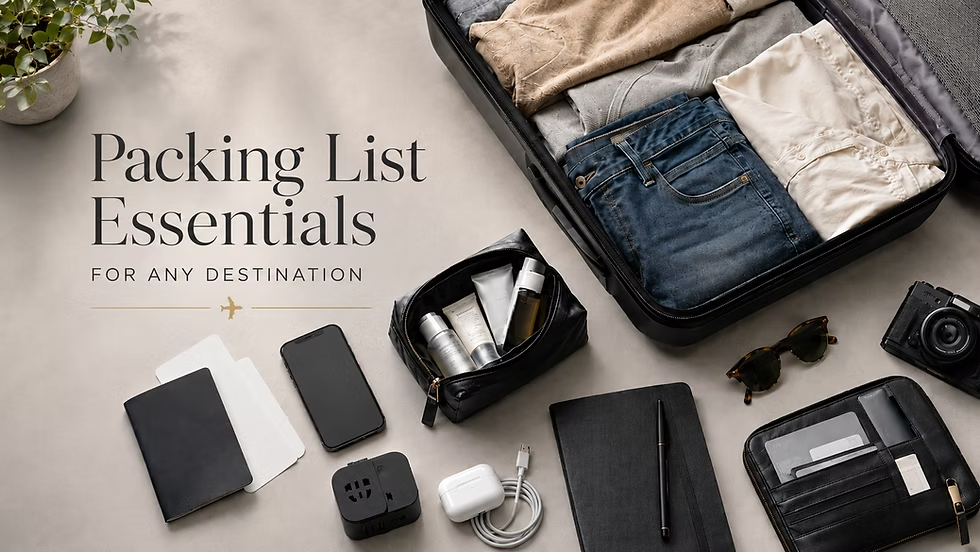
    [link to related guide: Travel Insurance Guide: What It Covers and Why You Need It] [Image alt text: “Open suitcase with folded clothes and travel documents laid out”]

  • How to Avoid Jet Lag on Long-Haul Flights (2026)

    How to Avoid Jet Lag on Long-Haul Flights (2026)

    Introduction

    “Drink lots of water” is the advice everyone gives about jet lag, and sure, it helps, but it’s nowhere near the full picture. Knowing how to avoid jet lag actually comes down to managing your body clock deliberately, starting before you even board the flight — not scrambling to fix it after landing feeling like a zombie.

    What’s Actually Happening to Your Body

    Jet lag isn’t just tiredness — it’s your circadian rhythm being out of sync with the local time zone. Crossing more than 3 time zones is usually where symptoms start showing up noticeably, and eastward travel tends to hit harder than westward.

    Start Adjusting Before You Fly

    Shifting your sleep schedule by 30-60 minutes a day, in the direction of your destination’s time zone, for a few days before departure genuinely reduces the adjustment period once you land.

    Quick answer: The most effective way to avoid jet lag is adjusting your sleep schedule gradually before departure, then immediately switching to destination time once onboard — not waiting until you land to reset your body clock.

    During the Flight: Set Your Watch Immediately

    The moment you board, switch your phone and mindset to destination time. Sleep if it’s nighttime there, stay awake if it’s daytime — even if it feels unnatural given your actual body clock at that moment.

    Light Exposure Matters More Than People Realize

    Sunlight is one of the strongest resets for your circadian rhythm. Getting outside in daylight soon after landing, even for a short walk, speeds up adjustment far more than staying in a dim hotel room.

    Caffeine and Alcohol Timing

    Alcohol might help you doze off on the plane, but it disrupts sleep quality and worsens dehydration — both of which extend jet lag recovery. Caffeine works fine strategically, but avoid it within 6 hours of your destination’s bedtime.

    A Practical Jet Lag Recovery Plan

    • Day of arrival: get sunlight exposure, stay awake until local bedtime even if exhausted
    • Avoid heavy meals right before sleeping in the new time zone
    • Light exercise (a walk, gentle stretching) helps reset the body clock faster than sitting still
    • Melatonin, taken close to your destination’s bedtime, works for some travelers — check with a doctor first

    FAQ

    How long does jet lag usually last? Roughly one day of recovery per time zone crossed, though this varies by individual and direction of travel.

    Is eastward or westward travel worse for jet lag? Eastward travel is generally harder on the body, since it requires shortening your day rather than extending it.

    Does melatonin actually help with jet lag? Many travelers report it helps, particularly for falling asleep at the new destination’s bedtime, but it’s worth checking with a doctor before use.

    Should I sleep during a long-haul flight or stay awake? Base it on your destination’s time zone, not your origin’s — sleep if it’ll be nighttime when you land.

    Does jet lag get worse with age? Some research suggests older travelers report longer recovery times, though it varies significantly by individual.

    Conclusion

    There’s no single trick for how to avoid jet lag completely — it’s a combination of pre-flight adjustment, disciplined light exposure, and just committing to the new time zone the moment you board. Start the adjustment early, and you’ll land functional instead of needing a full day just to recover.

    [link to related guide: Essential Packing List for International Travel Beginners] [Image alt text: “Traveler sleeping on a long-haul flight with an eye mask”]

  • Travel Insurance Guide: What It Covers & Why You Need It

    Travel Insurance Guide: What It Covers & Why You Need It

    Introduction

    Travel insurance feels like one of those things you buy and hope to never use — which is exactly why so many people skip it, right up until the one trip where they really needed it. This travel insurance guide breaks down what’s actually covered, because the fine print matters more here than in almost any other travel purchase.

    What Standard Travel Insurance Typically Covers

    Most policies cover trip cancellation, medical emergencies abroad, lost or delayed baggage, and flight delays past a certain threshold (usually 6-12 hours). Coverage amounts and thresholds vary significantly between providers, though.

    Medical Coverage Is the Part That Matters Most

    A hospital stay abroad, especially in the US or parts of Europe, can run into tens of thousands of dollars without insurance. This single risk alone justifies the cost of a policy for most international trips.

    Quick answer: The most important part of a travel insurance guide to understand is medical coverage — a single hospital stay abroad without insurance can cost more than an entire year’s worth of policies, making it the highest-value protection you’re buying.

    Common Exclusions People Miss

    Adventure activities like scuba diving, trekking above certain altitudes, or skiing often require an add-on rider — standard policies frequently exclude these by default. Pre-existing medical conditions also commonly need separate disclosure and coverage.

    Trip Cancellation Coverage: Read the Fine Print

    Not every cancellation reason qualifies for reimbursement. Illness, death in the family, and natural disasters typically qualify; simply changing your mind or work conflicts usually don’t, unless you’ve bought a “cancel for any reason” upgrade.

    How Much Should You Budget for Travel Insurance

    Basic international coverage typically runs 4-8% of your total trip cost. A trip costing ₹1,00,000 might need ₹4,000-8,000 in insurance — a small price relative to the protection it provides.

    Choosing the Right Policy

    • Check the medical coverage limit specifically — anything under $50,000 for US/Europe trips is often too low
    • Confirm adventure activities you’re planning are covered, or add the rider
    • Read the claim process before buying — some insurers require extensive documentation that’s hard to gather abroad
    • Compare at least 2-3 providers rather than defaulting to whatever your travel agent bundles in

    FAQ

    Is travel insurance mandatory for international trips? It’s mandatory for Schengen visa applications and increasingly required by some other countries too; elsewhere it’s optional but strongly recommended.

    Does travel insurance cover COVID-related cancellations? Most current policies do cover COVID-related medical costs, though cancellation coverage varies by provider — check the specific policy wording.

    What’s not covered by standard travel insurance? Pre-existing conditions without disclosure, extreme sports without a rider, and cancellations for personal reasons not listed in the policy are common exclusions.

    How do I file a travel insurance claim? Keep all receipts, medical reports, and police reports (for theft) as you go — claims processed with complete documentation move significantly faster.

    Is it cheaper to buy travel insurance early or closer to departure? Buying soon after booking your trip is generally recommended, since trip cancellation coverage often only applies to cancellations after the policy start date.

    Conclusion

    This travel insurance guide boils down to one point worth remembering: the cost of skipping it is only ever visible after something’s already gone wrong. Read the exclusions carefully, add riders for any adventure activities, and treat the premium as part of your trip cost, not an optional extra.

    [link to related guide: Essential Packing List for International Travel Beginners] [Image alt text: “Travel insurance documents and passport on a desk”]