Introduction
The first time you pack for an international trip, you either overpack out of anxiety or forget something you only notice at security. Both happened to me on my first solo trip abroad, honestly. This international travel packing list cuts out the guesswork so you’re not standing in your room at midnight wondering if you really need three pairs of jeans.
Start With Documents, Not Clothes
Most beginners pack clothes first and documents last, which is backwards. Passport (with 6 months validity remaining), visa printouts, travel insurance copy, and a photocopy of your passport stored separately — sort these before anything else goes in the bag.
The Clothing Trap Most Beginners Fall Into
You don’t need a different outfit for every day. Five tops, three bottoms, and one layering piece covers most 10-day trips if you’re willing to rewear things — which, let’s be honest, nobody at your destination is tracking.
Quick answer: A realistic international travel packing list for a 10-day trip includes 5 tops, 3 bottoms, one jacket, essential documents, a universal adapter, and a small medical kit — resist packing “just in case” items.
Electronics and Adapters
A universal adapter is non-negotiable — don’t assume your destination uses the same plug type as home. A portable charger and a downloaded offline map (Google Maps offline mode works fine) have saved more trips than any gadget on this list.
Toiletries and Medical Kit
Keep liquids under 100ml for carry-on, and pack a basic medical kit: paracetamol, ORS sachets, any prescription medication with its original packaging, and motion sickness tablets if you’re prone to it.
What Beginners Almost Always Overpack
- Shoes — two pairs max for most trips, one comfortable, one slightly dressier
- “Just in case” outfits for events that statistically won’t happen
- Full-size toiletries when travel-size versions exist for almost everything
- Guidebooks — your phone already has this information, and it weighs nothing
What Beginners Almost Always Forget
Travel insurance documents printed on paper, not just saved on the phone — some immigration counters still ask for a physical copy. A spare phone charging cable also gets left behind more often than you’d expect.
FAQ
How many kilograms should I pack for international travel? Most airlines allow 15-23kg checked baggage; packing to around 15kg keeps you comfortable across most airline limits without worry.
Do I need to carry cash for international trips? Yes, a small amount in the local currency for the first day, even if you plan to rely mainly on cards.
Should I pack a first aid kit for international travel? Yes — a basic kit covering pain relief, digestive issues, and any personal prescriptions is worth the small space it takes.
What’s the biggest mistake first-time international travelers make while packing? Overpacking clothes and underpacking documents — most destinations sell forgotten clothing items, but a missing visa printout can genuinely delay your trip.
Is a universal adapter really necessary? Yes, unless you’ve specifically confirmed your destination uses the same plug type as home.
Conclusion
A solid international travel packing list isn’t about packing more — it’s about packing the right handful of things and trusting that you can buy or manage the rest once you land. Lay everything out before packing, cut it by a third, and you’ll probably still have room to spare.
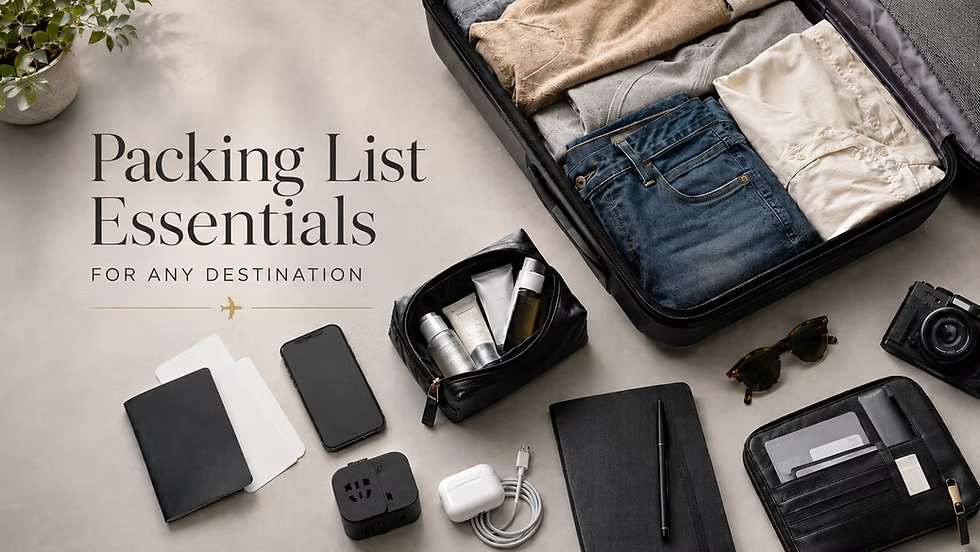
[link to related guide: Travel Insurance Guide: What It Covers and Why You Need It] [Image alt text: “Open suitcase with folded clothes and travel documents laid out”]