
Blog

  • Top Scuba Diving Destinations for First-Time Divers

    Top Scuba Diving Destinations for First-Time Divers

    Introduction

    Your first scuba dive shouldn’t happen in choppy water with poor visibility — that’s a fast way to make someone quit diving after one try. The best scuba diving destinations for beginners share a few things in common: calm, warm water, strong visibility, and dive schools with genuinely patient instructors.

    What Beginners Should Look For in a Dive Destination

    Water temperature above 24°C, visibility of at least 15-20 meters, and shallow reef sites under 12 meters depth make the biggest difference in how comfortable a first dive feels.

    Gili Islands, Indonesia

    Calm, current-light waters close to Bali, with an enormous number of PADI-certified dive schools competing on quality. Turtle sightings here are common enough that instructors almost promise them.

    Quick answer: For first-time divers, the Gili Islands in Indonesia offer some of the best conditions anywhere — warm, calm water, excellent visibility, and a high concentration of well-reviewed PADI dive schools.

    Koh Tao, Thailand

    Known within the diving community as one of the cheapest places in the world to get PADI certified, without sacrificing water quality or instructor standards. Whale sharks occasionally show up here too, a genuine bonus for beginners.

    Great Barrier Reef, Australia (Cairns Section)

    More expensive than Southeast Asian options, but the reef diversity is genuinely unmatched. Beginner-specific dive sites near Cairns keep depth and current manageable while still showing off serious coral variety.

    Red Sea, Egypt

    Exceptionally clear water and consistently warm temperatures year-round make this a reliable pick regardless of season — a rare quality among dive destinations that often have narrow weather windows.

    Andaman Islands, India

    A genuinely underrated option for Indian divers specifically — no international flight required, decent PADI schools around Havelock Island, and coral reef quality that surprises most first-timers.

    First Dive Preparation Tips

    • Book a discovery dive (a single supervised dive) before committing to a full certification course
    • Avoid diving within 24 hours before or after a flight, due to decompression risk
    • Choose a dive school with small group sizes — 4 students per instructor or fewer, ideally
    • Don’t skip the pool/confined water session, even if it feels unnecessary

    FAQ

    Do I need to know how to swim to try scuba diving? Yes, basic swimming competence is typically required, even for a beginner discovery dive.

    How long does PADI certification take? Open Water certification typically takes 3-4 days, combining theory, pool sessions, and open water dives.

    Is scuba diving safe for first-timers? Yes, when done with certified instructors following standard safety protocols — serious incidents are rare relative to the number of dives conducted globally.

    What’s the cheapest place to get PADI certified? Koh Tao, Thailand is widely known as one of the most affordable options globally without compromising on quality.

    Can I scuba dive if I wear glasses or contact lenses? Yes — prescription dive masks are available, and contact lenses generally work fine underwater with standard masks.

    Conclusion

    Picking the right one of these best scuba diving destinations as a beginner genuinely shapes whether you fall in love with diving or never try it again. Start somewhere calm like the Gili Islands or Koh Tao, get comfortable underwater, and the more demanding dive sites will still be there once you’re ready for them.

    [link to related guide: Best Trekking Trails in the Himalayas for Beginners] [Image alt text: “Beginner scuba diver exploring coral reef with instructor nearby”]

  •  Ultimate Guide to Wildlife Safaris in Africa (2026)

     Ultimate Guide to Wildlife Safaris in Africa (2026)

    Introduction

    Planning your first safari involves a surprising number of decisions most people don’t expect — which country, which season, budget versus luxury lodges, self-drive versus guided. This Africa wildlife safari guide cuts through that overwhelm by focusing on what actually matters for a genuinely good first safari experience.

    Choosing the Right Country

    Kenya and Tanzania dominate for classic Big Five safaris and the Great Migration. South Africa offers the most beginner-friendly infrastructure, with well-developed roads and malaria-free options in parts of the country. Botswana leans more luxury and remote.

    Timing Around the Great Migration

    The wildebeest migration moves seasonally between Kenya and Tanzania — roughly July-October in Kenya’s Maasai Mara, and December-June across Tanzania’s Serengeti. Timing your trip around this significantly affects which country makes more sense.

    Quick answer: For witnessing the Great Migration specifically, visit Kenya’s Maasai Mara between July and October, or Tanzania’s Serengeti between December and June — timing determines which country offers the better sighting window.

    Budget vs Luxury Safari: What Actually Differs

    Budget safaris (camping, shared vehicles) run $150-250 per day; mid-range lodges with private vehicles run $350-600; luxury tented camps push past $800-1,500 daily. The wildlife viewing quality doesn’t necessarily improve with price — the comfort level does.

    South Africa’s Kruger National Park

    Uniquely beginner-friendly because it allows self-drive safaris on well-maintained roads, cutting costs significantly compared to fully guided trips elsewhere. Malaria-free lodges are also available in the greater Kruger area for travelers wanting that option.

    What a Typical Safari Day Looks Like

    Most lodges run early morning game drives (5:30-9:30 AM, when animals are most active) and late afternoon drives (4-7 PM), with rest during the hot midday hours — not a constant, all-day drive as many first-timers assume.

    Practical Safari Preparation

    • Pack neutral-colored clothing (khaki, olive, brown) — bright colors and white can spook wildlife
    • Bring binoculars; most lodges don’t reliably provide quality ones
    • Budget for a yellow fever vaccination certificate if required for your specific route
    • Book 6-9 months ahead for peak migration season, as top lodges sell out fast

    FAQ

    What’s the best country in Africa for a first safari? Kenya and South Africa are both excellent for first-timers, with South Africa edging ahead on infrastructure and self-drive accessibility.

    How much does a 5-day safari typically cost? Budget options run around $750-1,250 total; mid-range trips run $1,750-3,000; luxury experiences can exceed $4,000 for 5 days.

    Is it safe to go on safari with young children? Many lodges have minimum age requirements (often 6-8 years) for game drives, so check specific lodge policies before booking.

    Do I need vaccinations for an African safari? Yellow fever, typhoid, and malaria prophylaxis are commonly recommended — consult a travel clinic based on your specific route.

    What’s the best time of year to see the most wildlife? Dry season (roughly June-October across most of East and Southern Africa) concentrates wildlife around water sources, making sightings easier.

    Conclusion

    This Africa wildlife safari guide really comes down to matching your budget and timing to the right country and park — there’s no single “best” safari, just the best one for what you’re prioritizing. Whether that’s the migration, self-drive freedom, or luxury comfort, get the timing right and the rest falls into place.

    [link to related guide: Top Scuba Diving Destinations for First-Time Divers] [Image alt text: “Safari jeep watching a herd of elephants at sunset in the savanna”]

  • Essential Packing List for International Travel Beginners

    Essential Packing List for International Travel Beginners

    Introduction

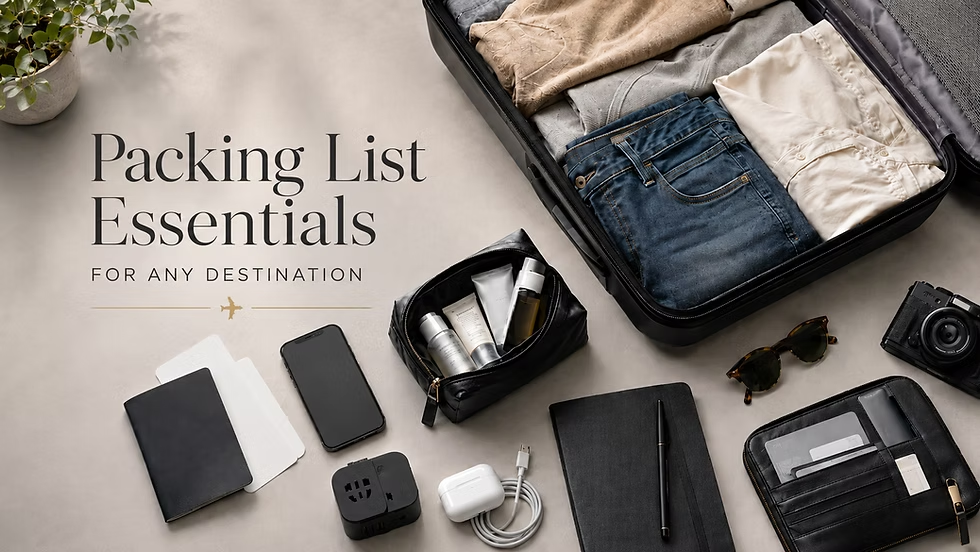
    The first time you pack for an international trip, you either overpack out of anxiety or forget something you only notice at security. Both happened to me on my first solo trip abroad, honestly. This international travel packing list cuts out the guesswork so you’re not standing in your room at midnight wondering if you really need three pairs of jeans.

    Start With Documents, Not Clothes

    Most beginners pack clothes first and documents last, which is backwards. Passport (with 6 months validity remaining), visa printouts, travel insurance copy, and a photocopy of your passport stored separately — sort these before anything else goes in the bag.

    The Clothing Trap Most Beginners Fall Into

    You don’t need a different outfit for every day. Five tops, three bottoms, and one layering piece covers most 10-day trips if you’re willing to rewear things — which, let’s be honest, nobody at your destination is tracking.

    Quick answer: A realistic international travel packing list for a 10-day trip includes 5 tops, 3 bottoms, one jacket, essential documents, a universal adapter, and a small medical kit — resist packing “just in case” items.

    Electronics and Adapters

    A universal adapter is non-negotiable — don’t assume your destination uses the same plug type as home. A portable charger and a downloaded offline map (Google Maps offline mode works fine) have saved more trips than any gadget on this list.

    Toiletries and Medical Kit

    Keep liquids under 100ml for carry-on, and pack a basic medical kit: paracetamol, ORS sachets, any prescription medication with its original packaging, and motion sickness tablets if you’re prone to it.

    What Beginners Almost Always Overpack

    • Shoes — two pairs max for most trips, one comfortable, one slightly dressier
    • “Just in case” outfits for events that statistically won’t happen
    • Full-size toiletries when travel-size versions exist for almost everything
    • Guidebooks — your phone already has this information, and it weighs nothing

    What Beginners Almost Always Forget

    Travel insurance documents printed on paper, not just saved on the phone — some immigration counters still ask for a physical copy. A spare phone charging cable also gets left behind more often than you’d expect.

    FAQ

    How many kilograms should I pack for international travel? Most airlines allow 15-23kg checked baggage; packing to around 15kg keeps you comfortable across most airline limits without worry.

    Do I need to carry cash for international trips? Yes, a small amount in the local currency for the first day, even if you plan to rely mainly on cards.

    Should I pack a first aid kit for international travel? Yes — a basic kit covering pain relief, digestive issues, and any personal prescriptions is worth the small space it takes.

    What’s the biggest mistake first-time international travelers make while packing? Overpacking clothes and underpacking documents — most destinations sell forgotten clothing items, but a missing visa printout can genuinely delay your trip.

    Is a universal adapter really necessary? Yes, unless you’ve specifically confirmed your destination uses the same plug type as home.

    Conclusion

    A solid international travel packing list isn’t about packing more — it’s about packing the right handful of things and trusting that you can buy or manage the rest once you land. Lay everything out before packing, cut it by a third, and you’ll probably still have room to spare.

    [link to related guide: Travel Insurance Guide: What It Covers and Why You Need It] [Image alt text: “Open suitcase with folded clothes and travel documents laid out”]

  • How to Avoid Jet Lag on Long-Haul Flights (2026)

    How to Avoid Jet Lag on Long-Haul Flights (2026)

    Introduction

    “Drink lots of water” is the advice everyone gives about jet lag, and sure, it helps, but it’s nowhere near the full picture. Knowing how to avoid jet lag actually comes down to managing your body clock deliberately, starting before you even board the flight — not scrambling to fix it after landing feeling like a zombie.

    What’s Actually Happening to Your Body

    Jet lag isn’t just tiredness — it’s your circadian rhythm being out of sync with the local time zone. Crossing more than 3 time zones is usually where symptoms start showing up noticeably, and eastward travel tends to hit harder than westward.

    Start Adjusting Before You Fly

    Shifting your sleep schedule by 30-60 minutes a day, in the direction of your destination’s time zone, for a few days before departure genuinely reduces the adjustment period once you land.

    Quick answer: The most effective way to avoid jet lag is adjusting your sleep schedule gradually before departure, then immediately switching to destination time once onboard — not waiting until you land to reset your body clock.

    During the Flight: Set Your Watch Immediately

    The moment you board, switch your phone and mindset to destination time. Sleep if it’s nighttime there, stay awake if it’s daytime — even if it feels unnatural given your actual body clock at that moment.

    Light Exposure Matters More Than People Realize

    Sunlight is one of the strongest resets for your circadian rhythm. Getting outside in daylight soon after landing, even for a short walk, speeds up adjustment far more than staying in a dim hotel room.

    Caffeine and Alcohol Timing

    Alcohol might help you doze off on the plane, but it disrupts sleep quality and worsens dehydration — both of which extend jet lag recovery. Caffeine works fine strategically, but avoid it within 6 hours of your destination’s bedtime.

    A Practical Jet Lag Recovery Plan

    • Day of arrival: get sunlight exposure, stay awake until local bedtime even if exhausted
    • Avoid heavy meals right before sleeping in the new time zone
    • Light exercise (a walk, gentle stretching) helps reset the body clock faster than sitting still
    • Melatonin, taken close to your destination’s bedtime, works for some travelers — check with a doctor first

    FAQ

    How long does jet lag usually last? Roughly one day of recovery per time zone crossed, though this varies by individual and direction of travel.

    Is eastward or westward travel worse for jet lag? Eastward travel is generally harder on the body, since it requires shortening your day rather than extending it.

    Does melatonin actually help with jet lag? Many travelers report it helps, particularly for falling asleep at the new destination’s bedtime, but it’s worth checking with a doctor before use.

    Should I sleep during a long-haul flight or stay awake? Base it on your destination’s time zone, not your origin’s — sleep if it’ll be nighttime when you land.

    Does jet lag get worse with age? Some research suggests older travelers report longer recovery times, though it varies significantly by individual.

    Conclusion

    There’s no single trick for how to avoid jet lag completely — it’s a combination of pre-flight adjustment, disciplined light exposure, and just committing to the new time zone the moment you board. Start the adjustment early, and you’ll land functional instead of needing a full day just to recover.

    [link to related guide: Essential Packing List for International Travel Beginners] [Image alt text: “Traveler sleeping on a long-haul flight with an eye mask”]

  • Travel Insurance Guide: What It Covers & Why You Need It

    Travel Insurance Guide: What It Covers & Why You Need It

    Introduction

    Travel insurance feels like one of those things you buy and hope to never use — which is exactly why so many people skip it, right up until the one trip where they really needed it. This travel insurance guide breaks down what’s actually covered, because the fine print matters more here than in almost any other travel purchase.

    What Standard Travel Insurance Typically Covers

    Most policies cover trip cancellation, medical emergencies abroad, lost or delayed baggage, and flight delays past a certain threshold (usually 6-12 hours). Coverage amounts and thresholds vary significantly between providers, though.

    Medical Coverage Is the Part That Matters Most

    A hospital stay abroad, especially in the US or parts of Europe, can run into tens of thousands of dollars without insurance. This single risk alone justifies the cost of a policy for most international trips.

    Quick answer: The most important part of a travel insurance guide to understand is medical coverage — a single hospital stay abroad without insurance can cost more than an entire year’s worth of policies, making it the highest-value protection you’re buying.

    Common Exclusions People Miss

    Adventure activities like scuba diving, trekking above certain altitudes, or skiing often require an add-on rider — standard policies frequently exclude these by default. Pre-existing medical conditions also commonly need separate disclosure and coverage.

    Trip Cancellation Coverage: Read the Fine Print

    Not every cancellation reason qualifies for reimbursement. Illness, death in the family, and natural disasters typically qualify; simply changing your mind or work conflicts usually don’t, unless you’ve bought a “cancel for any reason” upgrade.

    How Much Should You Budget for Travel Insurance

    Basic international coverage typically runs 4-8% of your total trip cost. A trip costing ₹1,00,000 might need ₹4,000-8,000 in insurance — a small price relative to the protection it provides.

    Choosing the Right Policy

    • Check the medical coverage limit specifically — anything under $50,000 for US/Europe trips is often too low
    • Confirm adventure activities you’re planning are covered, or add the rider
    • Read the claim process before buying — some insurers require extensive documentation that’s hard to gather abroad
    • Compare at least 2-3 providers rather than defaulting to whatever your travel agent bundles in

    FAQ

    Is travel insurance mandatory for international trips? It’s mandatory for Schengen visa applications and increasingly required by some other countries too; elsewhere it’s optional but strongly recommended.

    Does travel insurance cover COVID-related cancellations? Most current policies do cover COVID-related medical costs, though cancellation coverage varies by provider — check the specific policy wording.

    What’s not covered by standard travel insurance? Pre-existing conditions without disclosure, extreme sports without a rider, and cancellations for personal reasons not listed in the policy are common exclusions.

    How do I file a travel insurance claim? Keep all receipts, medical reports, and police reports (for theft) as you go — claims processed with complete documentation move significantly faster.

    Is it cheaper to buy travel insurance early or closer to departure? Buying soon after booking your trip is generally recommended, since trip cancellation coverage often only applies to cancellations after the policy start date.

    Conclusion

    This travel insurance guide boils down to one point worth remembering: the cost of skipping it is only ever visible after something’s already gone wrong. Read the exclusions carefully, add riders for any adventure activities, and treat the premium as part of your trip cost, not an optional extra.

    [link to related guide: Essential Packing List for International Travel Beginners] [Image alt text: “Travel insurance documents and passport on a desk”]

  • How to Find Cheap Flight Deals Using Google Flights

    How to Find Cheap Flight Deals Using Google Flights

    Introduction

    Google Flights gets treated like a basic search tool by most people, when it’s actually got features buried in the interface that can save serious money if you know where to look. These cheap flight deals tips go past the obvious “search in incognito mode” advice you’ve probably already heard a hundred times.

    Does Incognito Mode Actually Work?

    Google has stated that flight prices don’t change based on search history, but plenty of travelers still swear by it. Either way, it costs nothing to try, so it’s not bad advice — just not the guaranteed hack it’s often made out to be.

    Use the “Date Grid” and “Price Graph” Features

    Google Flights shows a calendar-style price grid and a graph view that reveals which nearby dates are cheaper — shifting your trip by even one day can sometimes cut the fare by 15-20%.

    Quick answer: The most reliable cheap flight deals tip on Google Flights is the price graph and date grid feature — shifting travel dates by 1-3 days often reveals fares 15-20% lower than your original search.

    Set Price Tracking Alerts

    Google Flights lets you track a specific route and get notified when prices drop. For international trips booked months in advance, this beats manually checking every few days by a wide margin.

    Search From a Nearby Airport

    Comparing fares from a secondary city airport, even one requiring a short domestic connection, sometimes beats a direct flight from your home airport by a meaningful margin — worth checking before locking in.

    Book on Tuesday Afternoons (Sometimes)

    This old advice has weakened over the years as airline pricing algorithms became more dynamic, but Tuesday and Wednesday searches still show slightly lower average prices than weekend searches in most route data.

    Other Practical Tips

    • Clear cookies or use a private browser window before final booking, just in case
    • Book 6-8 weeks ahead for domestic routes, 3-5 months ahead for international ones
    • Check both one-way fares separately — sometimes two one-ways beat a round-trip fare
    • Use the “explore” map feature if your destination is flexible, not fixed

    FAQ

    Is Google Flights actually cheaper than booking directly with an airline? Not inherently — it aggregates prices from airlines and OTAs, so it’s more about finding the lowest available fare, not a separate discount source.

    How far in advance should I book international flights? 3-5 months ahead typically shows the best average pricing, based on most fare-tracking data.

    Does the time of day I search matter? Less than people think — date and route matter far more than search timing.

    Should I book directly with the airline or through an OTA? Airlines often match OTA prices now, and booking direct usually makes changes and refunds easier.

    Are price alerts actually reliable? Yes, reasonably — they’re a solid way to track fare drops over weeks without manually checking daily.

    Conclusion

    None of these cheap flight deals tips are magic — they’re just about using the tools already available more deliberately instead of booking the first fare you see. Try the price graph, set an alert if your dates are flexible, and always double-check a nearby airport option before locking in your booking.

    [link to related guide: Best Time to Book International Flights for Lowest Fares] [Image alt text: “Traveler checking flight prices on laptop at airport”]

  • Layover Travel Guide: Explore a City in 8 Hours

    Layover Travel Guide: Explore a City in 8 Hours

    Introduction

    An 8-hour layover feels like too little time to leave the airport and too much time to just sit at a gate scrolling your phone. This layover travel guide exists for exactly that gap — enough time to genuinely see a city, if you plan the logistics tightly enough not to waste it on immigration lines.

    First, Check If You Even Need a Visa

    Some countries offer visa-free or visa-on-arrival transit specifically for layovers under a certain number of hours — Singapore, UAE, and Turkey all have transit-friendly policies worth checking before you assume you can’t leave the airport.

    The 8-Hour Math

    Budget realistically: 1 hour for immigration and security re-entry combined (often more at busy airports), 30-45 minutes each way for transport to/from the city center, leaving roughly 5-6 hours of actual exploring time.

    Quick answer: With an 8-hour layover, plan for about 1.5 hours of airport logistics and 1-1.5 hours of transport each way, leaving roughly 4-5 solid hours to explore — enough for one major landmark plus a meal.

    Singapore: The Gold Standard for Layovers

    Changi Airport itself is practically an attraction, but if you’ve got 8 hours, a quick trip to Gardens by the Bay or Chinatown is entirely doable via the efficient MRT system, with time to spare.

    Istanbul: History-Packed, Layover-Friendly

    Turkish Airlines even offers free city tours for long layovers on select routes — worth checking when booking. Otherwise, a taxi to Hagia Sophia and the Blue Mosque area covers a lot of history in a few hours.

    Dubai: Efficient But Rushed

    DXB’s immigration lines can eat more of your window than other airports on this list, so Dubai works best for layovers closer to 10 hours if you want a comfortable buffer, not a tight 8.

    Packing and Prep Tips for a Layover Excursion

    • Keep your boarding pass and transit visa documents easily accessible, not buried in checked luggage
    • Travel light — a small daypack only, don’t drag your full carry-on into the city
    • Pre-download offline maps in case of spotty connectivity
    • Set a hard return-to-airport deadline that’s earlier than you think you need, always

    FAQ

    Is it safe to leave the airport during a long layover? Generally yes, in major transit-friendly hubs like Singapore, Istanbul, and Dubai — just confirm visa requirements first.

    What’s the minimum layover time needed to leave the airport? 6 hours is typically the realistic minimum; anything shorter risks missing your connecting flight.

    Do I need to collect and recheck my luggage during a layover excursion? Depends on your ticket type — check with your airline, as some routes auto-transfer luggage while others require collection.

    Which airports offer free layover tours? Istanbul (Turkish Airlines) and Singapore (Changi) both offer official or unofficial free/low-cost layover tour options for eligible passengers.

    What happens if I’m late getting back for my connecting flight? Most airlines won’t wait, so building in extra buffer time is critical — treat your “return by” time as non-negotiable.

    Conclusion

    An 8-hour layover, used well, can turn a wasted travel day into an unplanned mini-trip — this layover travel guide just removes the guesswork around timing and visa logistics. Pick one landmark, one meal, and stick to a strict return deadline, and you’ll land at your final destination with a genuinely good story instead of just a stiff neck from the gate chairs.

    [link to related guide: How to Find Cheap Flight Deals Using Google Flights] [Image alt text: “Traveler with daypack exploring city skyline during airport layover”]

  • Best Time to Book International Flights for Lowest Fares

    Best Time to Book International Flights for Lowest Fares

    Introduction

    “Book early” is the advice everyone gives, but it’s not always true — book too early and airlines haven’t released their cheapest fare buckets yet; book too late and those cheap seats are already gone. Knowing the actual best time to book flights requires a bit more nuance than a generic rule of thumb.

    The General Sweet Spot

    For international flights, most fare data points to booking 3-5 months in advance as the sweet spot — early enough to catch lower fare classes, late enough that airlines have released their pricing structure for the route.

    Why “Too Early” Can Actually Cost More

    Airlines often open bookings 11 months out at a higher introductory price, testing demand before adjusting. Booking the moment a route opens isn’t automatically the cheapest option, contrary to popular belief.

    Quick answer: The best time to book international flights is typically 3-5 months before departure — long-haul routes to Europe or the US often show their lowest average fares in this window, based on historical fare tracking.

    Seasonal Variations by Region

    Flights to Europe price lowest when booked around 4-5 months ahead for summer travel. Flights to the US often show better deals booked slightly closer, around 2-3 months out, due to more frequent route competition.

    Day of the Week Still Matters (A Little)

    Tuesday and Wednesday remain marginally cheaper on average across most booking data, though the gap has narrowed as airline pricing has become more algorithm-driven and less tied to a fixed weekly cycle.

    Red Flags That Prices Won’t Drop Further

    • Fares holding steady across 3+ separate checks over 2 weeks usually means the price has bottomed out
    • Flights during major holidays (Diwali, Christmas, New Year) rarely get cheaper the longer you wait
    • Routes with limited airline competition tend to hold firm regardless of booking timing
    • Last-minute fares (under 3 weeks out) are almost always more expensive for international routes, contrary to domestic flight myths

    Practical Booking Strategy

    Set a price alert as soon as you know your travel dates, start seriously comparing around the 4-month mark, and book once you see a fare that matches or beats the historical average shown on tracking tools.

    FAQ

    Is it true that flights are cheapest on Tuesdays? Marginally, based on average data, though the effect has weakened significantly with dynamic pricing.

    How far ahead should I book flights for peak season travel (Diwali, Christmas)? 5-6 months ahead for these periods specifically, since demand-driven pricing kicks in earlier than usual.

    Do last-minute flight deals still exist for international travel? Rarely, and when they do, it’s usually for less popular routes or off-peak dates, not major international hubs.

    Does booking directly with the airline affect the best time to book flights? Not significantly — pricing patterns are similar whether booked direct or through an OTA.

    Should I wait for a sale, or book once I find a good fare? If the fare matches the historical average for that route, book it — waiting for a further drop is a gamble that doesn’t always pay off.

    Conclusion

    There’s no single magic date for the best time to book flights, but 3-5 months out remains the most reliable window based on the data available. Set alerts early, watch the price pattern for a couple of weeks, and book once the fare stabilizes rather than chasing a lower number that may never come.

    [link to related guide: How to Find Cheap Flight Deals Using Google Flights] [Image alt text: “Airplane wing view over clouds during international flight”]

  • How to Find Luxury Hotels at Budget Prices

    How to Find Luxury Hotels at Budget Prices

    Introduction

    Everyone wants the five-star pool photo without the five-star bill, and it’s genuinely possible more often than people think. Finding cheap luxury hotel deals isn’t about luck — it’s about knowing which booking windows, platforms, and quiet tricks hotels don’t advertise but absolutely still honor.

    Why Luxury Hotels Discount More Than You’d Think

    Hotels would rather fill a room at 40% off than leave it empty — empty rooms earn zero, discounted rooms still earn something plus guest spending on food and spa services. This is exactly why last-minute deals exist even at high-end properties.

    Booking Timing That Actually Moves the Price

    Tuesday and Wednesday bookings tend to show lower rates than weekend searches, oddly enough — hotel pricing algorithms adjust based on real-time demand, and midweek demand is simply lower for leisure searches.

    Quick answer: The cheapest time to book a luxury hotel is typically 3-5 weeks before your stay on a Tuesday or Wednesday, when demand-based pricing algorithms show their lowest rates.

    Use Opaque Booking Sites for Unsold Rooms

    Platforms like Hotwire and Priceline’s “Express Deals” hide the hotel name until after booking, but reveal the star rating and general area — this lets hotels discount heavily without publicly undercutting their listed rates.

    Call the Hotel Directly

    This sounds outdated, but it works. Front desk staff sometimes have discretion to offer a rate or room upgrade that isn’t visible on any booking platform, especially for direct bookings that skip the OTA commission.

    Loyalty Programs Aren’t Just for Frequent Flyers

    Signing up for a hotel chain’s free loyalty tier before booking — even for a first stay — often unlocks member-only rates that run 10-15% below the public price shown to non-members.

    Off-Season and Shoulder-Season Timing

    • Luxury resorts in Southeast Asia often drop 30-40% during their respective monsoon shoulder seasons
    • European luxury hotels discount heavily in January-February, right after New Year’s crowds clear
    • Middle Eastern luxury hotels see summer rates crash due to extreme heat keeping most tourists away
    • Booking 45+ days out generally beats both last-minute and mid-range booking windows for luxury properties specifically

    FAQ

    Are opaque booking sites actually reliable? Yes, generally — you’re still booking a real, verified hotel; you just don’t know which one until payment confirms.

    Does calling the hotel really get a better rate than booking online? Sometimes, particularly for direct bookings without a middleman commission — it’s worth a quick call before booking online regardless.

    Is it worth joining a hotel loyalty program for just one stay? Often yes — the discount alone can outweigh any effort of a five-minute signup.

    What’s the best day of the week to book a hotel? Tuesday and Wednesday consistently show lower prices across most booking platforms.

    Do luxury hotels ever price-match? Some do, especially for direct bookings if you show a lower rate from a competing OTA — it doesn’t hurt to ask.

    Conclusion

    Getting cheap luxury hotel deals really comes down to timing, a bit of persistence, and not settling for the first price a website shows you. Try an opaque booking site, sign up for the loyalty program, and don’t be afraid to just pick up the phone — the discount is often just one honest question away.

    [link to related guide: Hotel vs Airbnb: Which Saves More Money] [Image alt text: “Luxury hotel pool overlooking the ocean at sunset”]

  • Best Boutique Hotels for a Romantic Getaway (2026)

    Best Boutique Hotels for a Romantic Getaway (2026)

    Introduction

    Big resort chains sell romance in a very generic way — rose petals on the bed, a couples’ massage menu, the same infinity pool photo every property seems to have. The best boutique hotels for couples do something different: fewer rooms, more personality, and staff who actually remember your name by day two.

    What Makes a Boutique Hotel Different From a Resort

    Scale, mostly. A boutique property with 15-20 rooms simply can’t operate like a 300-room resort — service becomes personal almost by necessity, and the design tends to reflect the owner’s actual taste rather than a corporate template.

    Amansara, Siem Reap, Cambodia

    A former royal residence turned into an intimate 24-suite property, walking distance from temple tours but worlds away from the tourist buzz of central Siem Reap. Private pools in several suites add to the appeal.

    Quick answer: For couples wanting privacy plus culture, Amansara in Siem Reap combines a historic royal residence, private plunge pools, and proximity to Angkor Wat in one intimate 24-suite property.

    Villa Lena, Tuscany, Italy

    An artist-residency-turned-boutique-hotel, with just 12 rooms scattered through a restored farmhouse. It skips the polished-hotel feel entirely — more like staying at a very well-decorated friend’s countryside home.

    The Datai, Langkawi, Malaysia

    Set inside a rainforest reserve rather than beside it, with rooms designed to blend into the tree canopy. Wildlife-spotting from your own balcony is a genuine possibility here, not just marketing copy.

    Belmond Hotel Caruso, Ravello, Italy

    Perched on the Amalfi Coast cliffs, this former 11th-century palace has an infinity pool that’s become one of the most photographed spots in Italy for good reason — the Mediterranean view is uninterrupted.

    What to Look for When Booking a Boutique Property

    • Room count under 30 usually signals genuinely personalized service, not just marketing language
    • Read reviews specifically mentioning “staff remembered” or similar — a strong signal of real personal attention
    • Ask directly about honeymoon or anniversary packages even if not advertised; many boutique hotels create these on request
    • Confirm privacy features (private pools, secluded terraces) before booking if that’s the priority

    FAQ

    Are boutique hotels more expensive than resorts? Not always — many boutique properties in Southeast Asia and parts of Europe price competitively with mid-range resort chains.

    What’s the difference between a boutique hotel and a villa rental? Boutique hotels offer hotel-level service (daily housekeeping, on-site staff, dining) while villas are typically self-catered with less included service.

    Do boutique hotels offer better privacy than big resorts? Generally yes, simply due to lower guest volume and more secluded room layouts.

    Is it worth booking a boutique hotel for a short weekend trip? Yes — the personalized experience often matters more on a short trip since you’ll spend more time actually at the property.

    How far in advance should I book a popular boutique hotel? 2-3 months ahead for peak season, given the limited room count means these properties sell out faster than large resorts.

    Conclusion

    The best boutique hotels for couples aren’t necessarily the most expensive option — they’re the ones that feel considered, personal, and specific to a place rather than replicable anywhere else in the world. Pick one property, skip the generic resort loop entirely, and let the smaller scale do the romantic heavy lifting.

    [link to related guide: How to Find Luxury Hotels at Budget Prices] [Image alt text: “Private plunge pool suite overlooking rainforest canopy”]